Hidden fees, token limits, and a render queue that stalls at the worst possible moment, if you've been running production workflows on Seedance, at least one of those has already cost you a deadline. As AI video generation moves from experiment to infrastructure, the platform you commit to shapes everything: your output volume, your cost forecasting, and how fast your team can actually move.
The 2026 AI Video Landscape: Four Names, One Clear Hierarchy
The market has consolidated fast. Four platforms are doing serious work:
- Sora (OpenAI): The model that started the modern AI video era. Cinematic quality ceiling, but render times are slow and operational costs are punishing at volume.
- Kling AI (Kuaishou): Technically impressive on physics simulation, but ecosystem integrations outside China remain thin and the roadmap is opaque for Western studios.
- Seedance (ByteDance): The speed specialist. Optimized for short-form video and deeply wired into CapCut and TikTok. Fast to learn, fast to output, until your projects outgrow its infrastructure.
- Gemini Omni (Google DeepMind): Launched at Google I/O on May 19, 2026, this is the first native multimodal model from Google that unifies text, image, audio, and video generation in a single pipeline. Built from the ground up for professional-scale production.
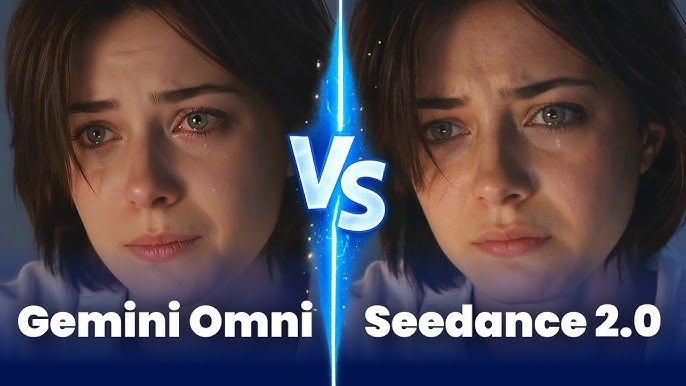
The real competition for studio and agency budgets right now is between Seedance and Gemini Omni and that's where the interesting tradeoffs live.
What Seedance Does Well (And Where It Hits Its Ceiling)
Seedance earns its reputation in a specific lane. For individual creators and small teams producing high volumes of short-form content inside the ByteDance ecosystem, it's genuinely fast and frictionless. The CapCut integration is tight, the interface is approachable, and the time-to-first-draft is hard to beat.
The problems surface the moment you push beyond that lane.
Seedance's rendering infrastructure was built around TikTok's short-video pipeline, which is excellent for what it was designed for, but shows strain under longer sequences, heavier asset files, or peak-hour volume. Queue delays are a documented operational issue, not an edge case.
More significantly, the feature set that professional studios need isn't bundled, it's itemized. High-quality AI voiceover, advanced lip-sync, AI scriptwriting assistance, these are separate add-ons, each with their own billing. That structure makes true cost forecasting genuinely difficult. What looks like an accessible entry price expands quickly once you're running real campaigns, and the hidden fee problem ($0.29/min for advanced voiceover alone) compounds fast at scale.
Custom AI training on proprietary assets, the kind of brand-consistent LoRA training that agencies increasingly need, is technically possible on Seedance, but priced in a way that makes it impractical for most studios.
What Gemini Omni Brings to the Table
Gemini Omni launched May 19, 2026, and it represents a fundamentally different design philosophy than Seedance. Where Seedance grew outward from short-form video, Gemini Omni was architected from the start for complex, multi-format, professional production.
A single pipeline for everything. Before Omni, Google ran three separate systems: Veo for video, Imagen for images, separate audio infrastructure. Gemini Omni collapses all of that into one model. Script to storyboard, storyboard to video, video to localized multilingual output, one connected flow, not a patchwork of platforms.
A context window that matches real production complexity. Gemini Omni processes up to 2 million tokens in a single pass, the equivalent of hours of source video. That's a different capability tier than Seedance's segmented approach, and it matters immediately for long-form content, documentary production, and complex multi-scene sequences.
Transparent, fixed-cost pricing. Fixed monthly plans mean you know exactly what you're getting before the invoice arrives. No per-second voiceover charges, no resolution surcharges, no token overage surprises. For studios managing production budgets across multiple clients, that predictability is a structural advantage, not a minor convenience.
Infrastructure that holds under load. Running on Google Cloud's distributed architecture, Gemini Omni maintains consistent render speeds regardless of concurrent workload. The Flash architecture is specifically designed to eliminate the queue delay problem that Seedance users hit during peak hours.
Support that matches enterprise expectations. 24/7 Google Cloud specialist support is a meaningful contrast to Seedance's primarily ticket-based help model, especially when a render issue surfaces mid-campaign.
Who Should Use Which Platform
Seedance makes sense if you're a solo creator or small team working primarily in short-form content within the TikTok/CapCut ecosystem, and your production volume stays within the bounds that Seedance was designed for. In that lane, it's fast and effective.
Gemini Omni is the right call if you're running a studio, agency, or content operation with real scale requirements — multilingual output, long-form production, brand-specific AI training, or any workflow that needs predictable monthly costs and infrastructure that won't stall under pressure. The consolidated pipeline, transparent pricing, and Google Cloud backbone make it the more defensible long-term choice for professional buyers.
Bottom Line
Seedance is a capable tool for a specific use case. The problems start when your production ambitions outgrow the box it was built in — and the billing model makes it easy to not notice how fast that's happening.
Gemini Omni enters the market answering the exact questions that Seedance leaves open: What will this actually cost at scale? Can it handle my full production pipeline? Will it hold up when I need it most? For studios ready to build on a platform rather than work around one, the answer is fairly clear.
Published May 2026. Gemini Omni launched at Google I/O on May 19, 2026. API availability and independent benchmarks pending.