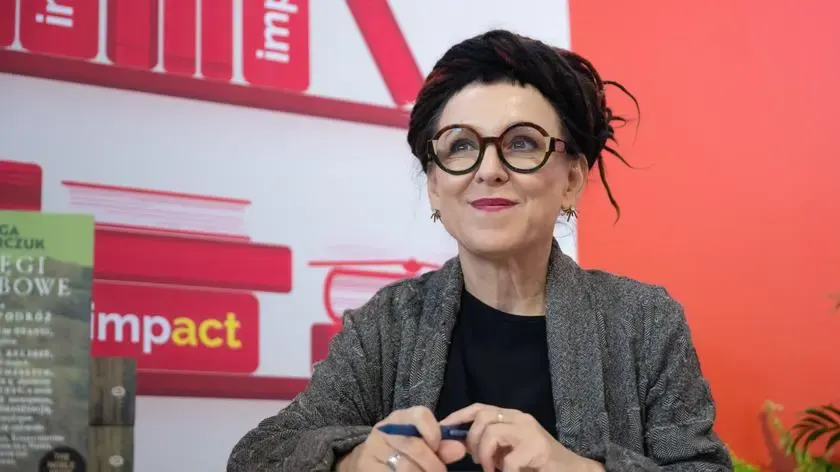
Nobel Prize-winning author Olga Tokarczuk has issued a public clarification after comments she made in a Polish-language interview were widely interpreted as suggesting that artificial intelligence had played a role in writing her forthcoming novel. The remarks, translated and shared on social media, set off a heated discussion in literary circles about the boundaries between research assistance and creative authorship.
How the controversy began
The backlash traces back to writer Maks Sipowicz, who drew attention to the interview on Bluesky and shared translated excerpts of Tokarczuk's remarks. In the original conversation, the author spoke openly about consulting an advanced AI model during her creative process. She described asking the tool what songs her characters might have heard at a dance several decades ago, and mentioned occasionally addressing the machine as "darling" when prompting it to help develop narrative directions.
Tokarczuk also described AI as possessing "an advantage of unbelievable proportion" for literary fiction, though she acknowledged that such models are prone to hallucination, particularly around economics and hard factual data. In another translated passage, she appeared to argue that writers, with their wide and associative modes of thinking, may be among the first creative professionals to engage seriously with AI tools and that engaging with advanced language models had expanded her own creative horizons.
The remarks landed at a moment of heightened sensitivity. Writers, translators, publishers and readers are already in active, sometimes acrimonious disagreement about the ethical limits of AI in creative work touching on questions of authorship, originality, copyright and what it means for a work to remain genuinely human. For a Nobel laureate to speak positively about the technology predictably intensified the debate.
Tokarczuk's response: research, not authorship
Through her publisher, Tokarczuk issued a statement to Lit Hub firmly denying that AI had contributed to her writing. She acknowledged that live remarks before an audience can be misunderstood, and clarified that she uses artificial intelligence the same way many other people do: as a tool for faster documentation and preliminary fact-checking. She added that she always verifies information obtained this way, as she has long done using books, libraries and archives.
Her forthcoming novel is set to be published in Polish in autumn 2026. She was unequivocal that the machine played no authorial role in it.
In a characteristically dry aside, Tokarczuk noted that she sometimes draws inspiration from dreams and, preempting a second round of misreadings, clarified that they are her own dreams.
A distinction that matters and that the industry is still working out
Tokarczuk's statement drew a clear conceptual line: AI may accelerate background research, but the imaginative work remains hers. That boundary is meaningful, but it is also the very boundary that much of the publishing world is currently trying to define, codify and enforce.
The episode is instructive precisely because the controversy arose not from proven AI-generated text, but from candid, perhaps imprecise, public remarks about an evolving personal workflow. It suggests that the conversation around AI and authorship has become so charged that even discussing the technology positively in any context carries reputational risk for writers.
At the same time, readers and critics are right to ask hard questions. When a celebrated author describes an AI model as deepening her thinking and expanding her horizons, the line between inspiration and generation becomes genuinely difficult to see from the outside. Transparency and precision matter more now than they ever have.
The larger question the clarification doesn't resolve
Tokarczuk's statement does not close the debate. If anything, it sharpens the questions that sit beneath it. The central issue is no longer whether writers will use AI in some form many already do. The harder questions concern what exactly they use it for, how honestly they disclose it, and whether the finished work still carries the full pressure, risk and strangeness of a human mind working alone.
Those questions do not have agreed-upon answers yet. What the Tokarczuk episode demonstrates is that the literary world is going to demand them, loudly, from every major author who speaks candidly about their process.